
Dwelling prices in 26
My two bobs worth

Synopsis
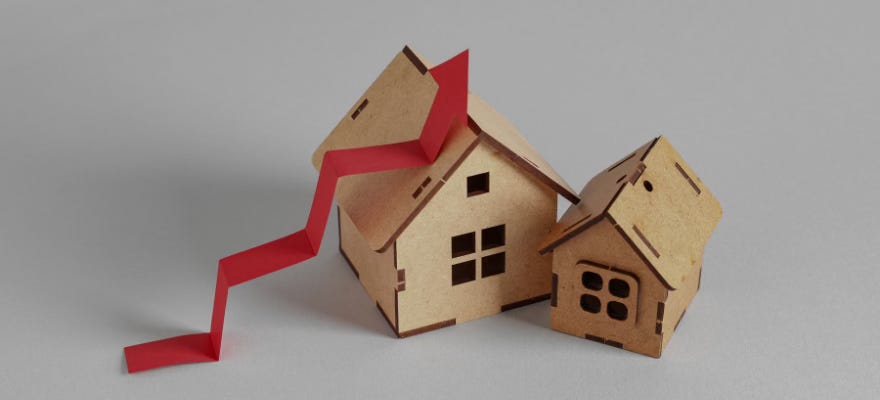
Australian dwelling values rose almost 9% in 2025, but the conditions that drove recent gains are fading. Supply shortages remain structural, borrowing costs are likely to rise further, and markets are fragmenting by product and location. In 2026, prices are still likely to increase - but more slowly and unevenly. Growth of 2% to 6% looks realistic, with this year likely marking the end of the current housing upswing.
Last year
Depending on who you believe, Australian dwelling values rose by just under 9 % last year. That made 2025 the strongest annual result since 2021, helped along by modest interest rate cuts and the Federal Government’s expanded first home buyer schemes in the second half of the year.
As always, the averages hid a wide spread of outcomes. Perth and Darwin led the capitals, growing at roughly twice the national rate, while Sydney and Melbourne managed closer to half the 9% national clip. In regional Australia, the standout was the Darling Downs, centred on Toowoomba, where median dwelling values jumped 19% between calendar 2024 and 2025.
Listen
Still too frazzled after the summer break to read my full post. Okay. Listen to my 3 minute summary instead.
So, what does that mean for 2026?
Before jumping to price forecasts, it’s worth setting out the key forces likely to shape outcomes this year. Four stand out.
First, supply scarcity remains structural, not cyclical.
By now it should be obvious that Australia’s housing shortage isn’t a temporary hangover from COVID. Housing starts remain well below what population growth requires. Construction costs are still elevated. Labour shortages persist. Planning reform remains slow and contested. Markets are no longer waiting for a meaningful “supply response” and are increasingly pricing housing as if scarcity is permanent. That doesn’t guarantee booms everywhere, but it does lift price floors, particularly in established and highly sought-after locations.
Second, the RBA is more likely to tighten than ease.
If the RBA were to lift the official cash rate in 2026 – my bet is by two moves of 0.25%, or 0.50% in total - the impact on borrowing capacity would be materially larger than the headline number suggests.
Assuming lenders pass on the full increase, a 0.50% rise in mortgage rates typically reduces maximum borrowing capacity by around 8% to 10%, depending on borrower type. This happens because serviceability is assessed at the actual mortgage rate plus a buffer (around 3%), so even modest rate increases compound through lender calculators.
For households, that can mean a borrowing limit falling from $1.0 million to around $880,000 to $920,000, or $800,000 to $700,000 to $735,000.
Importantly, this does not translate into equivalent house price falls. Instead, the adjustment occurs through behaviour. Some marginal buyers exit, others trade down in size or location, and existing owners delay selling. Turnover slows, listings tighten, and price growth flattens rather than collapses.
Investors tend to feel the impact more sharply due to tighter assessment rules and higher cash-flow sensitivity, reducing competition at the margin.
The net effect is not a crash, but a more locked-up market, where higher rates cap growth and mobility rather than forcing widespread price declines.
PS. And if I have made the wrong call here, and the RBA moves the cash rate less or more during 26, then as a rule of thumb, each 0.25% rise trims borrowing power by roughly 4% to 5% - again, depending on borrower type. So, you can do your own calculations.
Third, market fragmentation deepens.
By 2026, the idea of a single “housing market” is essentially meaningless. Performance varies sharply by product, price point, location and buyer cohort. Entry-level segments remain competitive but hit affordability ceilings faster. Premium markets become more discretionary. Apartments split between quality and compromise. Fringe markets struggle when buyers hesitate. City wide averages matter less. Micro-markets matter more - even if I’m still about to give you a national forecast!
If you’re serious about understanding what’s really happening across South East Queensland — not just the headlines — my Ready Reckoner Reports are a good place to start. They’re local, practical and designed to make sense of messy markets.
And if SEQ isn’t your patch, I can produce an RRR for almost any LGA across Australia. Want one? Want exclusivity? Flick me an email and let’s get you properly positioned for 2026.
Fourth, rental pressure persists and politics intensifies.
Vacancy rates remain low and competition for rental stock fierce across most capitals and major regions. As rental stress becomes politically intolerable, intervention risk rises. Caps, taxes, incentives and regulatory tweaks are likely to dominate the debate, with the May 2026 Federal Budget almost certain to include a mix of sticks and carrots aimed at housing - and taxing property gains. I expect this to dampen demand more than it lifts supply, though it may conveniently shift attention from other political headaches.
So, what about dwelling prices?
For mine, they’ll keep rising — but more slowly and unevenly. Higher mortgage costs cap momentum, but undersupply, population growth and low turnover continue to provide support.
A realistic national outcome is around 2% to 6% annual growth, with:
4% to 7% in tightly supplied, downsizer owner-occupier-driven markets, especially in those areas that attract a high level of interstate buyers
0% to 3% in more discretionary and investor dominated segments as FOMO still applies
flat outcomes where affordability issues and resale supply increases start to collide
I also suspect 2026 marks the end of the current upswing, which began with record-low interest rates and a sharp COVID-era lift in construction costs. The extraordinary gains since 2020 - around 50% nationally, and far more in some locations - are unlikely to be repeated for a generation. Fifteen to twenty years at least. Possibly longer.
More on this later in the year. Now that we’re back on the tools, there’s a lot to cover in 2026 - and yes, for the time being, the Missive will be landing twice a week.
Groan on.